

Luxury Market Intelligence • 8 min read • July 2026
Not All Market Signals Deserve Equal Weight
A longer commitment is not a better prediction. It may be a different one.
A working note on why the length of a capital commitment may reveal more about conviction than a season's worth of trend data, and why that is a question, not yet a conclusion.
The Observation
I began by treating every market signal equally.
Fashion. Retail. Hospitality. Residential development. When I first started tracking the luxury market, each new move looked like a data point of the same size.
A capsule collection, a flagship lease, a resort groundbreaking, a branded residence announcement, I logged them side by side, as if they carried the same informational weight. Over time, that habit started to feel imprecise. The signals were not arriving from the same altitude, and they were not promising the same thing.
The observation that unsettled me was simple: a runway collection can disappear in a season, while a luxury hotel or branded residence represents a capital commitment measured in years or decades. Both are described as evidence of “where luxury is going.” They are clearly not evidence of the same kind.
A runway collection can disappear in months. A branded residence is underwritten for a decade. Reading them as equal signals may be the first mistake.
The starting point
Why I Began Questioning My Assumption
The doubt started on the retail floor.
The shift in my thinking did not begin with a spreadsheet. It began with how quickly the most visible signals turn over. A flagship opens with enormous fanfare; a brand exits the same street a few years later with none. Fashion and luxury retail generate the loudest, most frequent signals in the market, and, I started to suspect, some of the least durable.1
That is not a criticism of the category. Fashion is supposed to move quickly; novelty is part of its function. But if the signals that arrive most often are also the ones that reverse most often, then counting them equally with a twenty-year commitment quietly overweights noise. That was the assumption I could no longer defend.
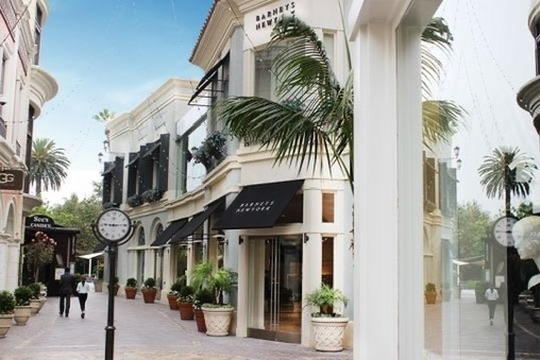
Not All Market Signals Are Equal
The same market, committing over very different lengths of time.
It helps me to lay the signals out by the horizon each one implicitly underwrites. The point is not the precision of the numbers, it is the order of magnitude between them. A collection is measured in seasons; a residence is measured in decades.
Signal by Commitment Horizon
1 Season
Fashion Collection
designed, shown, retired
Fashion vs. Long-Term Capital
Does a longer commitment reveal more, or just something different?
The tempting conclusion is that the biggest, longest, most capital-intensive commitments are the most reliable predictors. A developer who breaks ground on a branded residence has underwritten demand across a horizon that a seasonal collection never has to.2 That patience looks like confidence.
But I want to resist that shortcut. A longer time horizon changes the cost of being wrong, which changes how carefully the decision is made. It does not guarantee the decision is correct. Confident capital has been wrong before, repeatedly, and expensively.3 What a long commitment may reveal is conviction and diligence, not accuracy. Those are worth reading. They are not the same as being right.
Branded residences are useful precisely because they sit at the far end of this range. The segment has expanded sharply over the past decade, with the global pipeline continuing to grow into the second half of the 2020s.4 A brand attaching its name to a building for twenty years is making a claim about durability that a lookbook never has to.
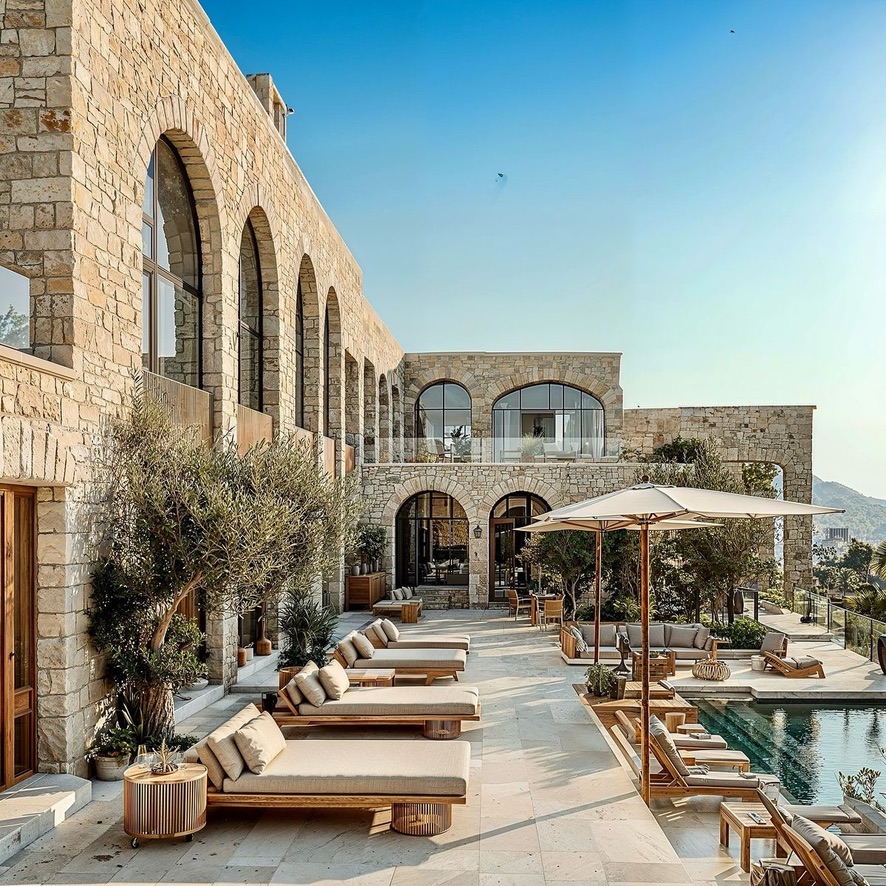
Hospitality as a Market Signal
An operator underwrites the same guest for twenty years.
Hospitality sits in the interesting middle of the range, and it is where the logic of commitment length becomes most legible. A luxury hotel is not a product launch; it is a multi-decade operating relationship with a guest the operator has to keep persuading, night after night, long after the ribbon is cut.5 The building is expensive. The promise attached to it is more expensive still.
That is why a groundbreaking reads differently to me than a runway. When an operator commits land, capital, and a brand name to a location, it is making a durable claim about who will be traveling there, and how they will want to spend, a decade from now. The claim can be wrong, but it cannot be casual. The underwriting horizon does not permit it.
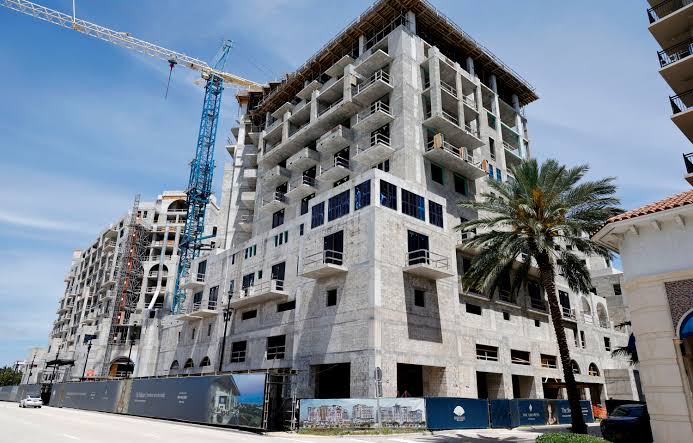
A crane is not a prediction about this season. It is a wager about the guest who will walk through the door a decade from now.
On operator conviction
How I’m Reasoning
Keeping the facts, the observations, and the interpretation separate.
The risk in a note like this is letting an interesting interpretation quietly borrow the authority of a fact. To guard against that, I try to keep the layers of the argument visibly distinct, and to be honest about where each claim actually sits.
How This Reasoning Is Built
Facts
What is observable and documented
- Fashion, retail, hospitality, and residential commit capital over different, measurable time horizons.
- The branded-residence segment has grown materially over the past decade.
- Longer-horizon projects require more extensive underwriting before capital is committed.
Observations
Patterns I notice across those facts
- Longer commitments cluster around brands signaling permanence, not novelty.
- Short-horizon signals turn over quickly and are easily mistaken for direction.
Interpretations
What I currently think it might mean
- Commitment length may be a proxy for conviction and diligence.
- Weighting signals by horizon could reduce the noise of seasonal trends.
Open Questions
What I still cannot answer
- Does higher conviction actually correlate with better forecasts, or just larger losses when wrong?
- Are long-horizon signals lagging indicators dressed up as leading ones?
Where It Stands
What I know, what I think, and what could prove me wrong.
If this is going to become a durable part of how I read the market, it has to survive its own counterarguments. So it is worth stating plainly where the confidence ends.
Where the Research Stands
What I Know
- Luxury signals commit capital over very different horizons.
- Longer horizons demand more underwriting before a decision.
- Branded residences have grown into a distinct long-horizon category.
What I Think
- Commitment length is closer to a measure of conviction than of accuracy.
- Weighting signals by horizon may sharpen how I read demand.
What Could Prove Me Wrong
- Evidence that seasonal signals predict demand as well as long-horizon ones.
- A pattern of confident, long-horizon capital being consistently wrong.
- Signal length reflecting financing structure, not conviction at all.
Conclusion
This is the first step, not the conclusion.
I want to be careful not to present this as a finished model. It is a working note, the opening of a line of research I expect to revise. The next step is unglamorous: gathering enough cases where long-horizon signals and short-horizon signals disagreed, and seeing which one the market eventually proved right.
Until then, the honest position is a narrow one. Not all market signals deserve equal weight, but I have only shown that they differ, not yet how they should be weighed. That distinction is the whole point of publishing the thinking while it is still forming.
Executive Takeaway
Treat this as a hypothesis under construction: commitment length is a signal worth reading, precisely because it is so easy to mistake for proof.
Notes
- 1.Luxury and fashion retail turn over store footprint on comparatively short cycles; see CBRE retail research and Bain's luxury-goods studies on flagship openings, closures, and lease terms. ↩
- 2.Long-horizon real estate decisions are underwritten across multi-year demand and financing assumptions; see CBRE and JLL investor research on retail and hotel investment horizons. ↩
- 3.The history of luxury and hospitality development includes well-capitalized projects that misjudged demand, a reminder that conviction and accuracy are not the same variable. ↩
- 4.Knight Frank, The Wealth Report, and Savills branded-residences research document sustained growth in the global branded-residence pipeline through the 2020s. ↩
- 5.Luxury hotel development and management agreements typically span multiple decades of operating commitment; see JLL Hotels & Hospitality investment research. ↩
Sources & Research
This article incorporates publicly available research, investor reports, industry studies, and market data. Sources include:
- Bain & Company, Global Luxury Goods Market Study
- McKinsey & Company, State of Luxury / State of Fashion
- Knight Frank, The Wealth Report (Branded Residences)
- CBRE, Retail & Real Estate Research
- JLL, Hotels & Hospitality Investment Outlook
- Deloitte, Global Powers of Luxury Goods
Figures are directional and drawn from public industry research; they illustrate relative commitment horizons rather than precise, directly comparable measures. Interpretations represent Lauren Oakes' evolving analysis, not predictions.
About the Author

Lauren Oakes
Development Strategist
Lauren Oakes is the Founder & Principal Advisor of Lauren Oakes Creative, researching consumer behavior across luxury, hospitality, retail, and the Western market. Her Market Notes publish research while it is still evolving, separating what is known from what is interpreted.